Are Premium Travel Cards Worth the Annual Fee? Here's How We Decide

When We First Saw the Annual Fee…
I'll be honest.
The first time I saw an annual fee of several hundred dollars on a travel credit card, my immediate thought was:
"Who would actually pay that much for a credit card?"
We were a normal middle-class family trying to figure out how to travel more without spending a fortune—not looking for another expensive bill.
At the time, I couldn't imagine paying hundreds of dollars each year just to keep a credit card in my wallet.
Looking back, I realize I was asking the wrong question.
Instead of asking...
"Is a high annual fee worth it?"
...I should have been asking...
"What could this card actually help our family do?"
That completely changed how we looked at premium travel cards.
Today, our family has opened several premium cards over the years.
Some we've kept.
Some we've downgraded.
Others eventually no longer fit our travel goals.
The biggest lesson we've learned is this:
Opening a premium travel card and keeping a premium travel card are two completely different decisions.
Here's the framework we use today.
What Makes a Travel Card "Premium"?
For simplicity, we tend to think of travel rewards cards in three broad groups:
No annual fee
Mid-tier annual fee
Premium annual fee
Premium travel cards generally come with higher annual fees but may also include benefits like:
Large welcome offers
Flexible rewards that can be transferred to travel partners
Airport lounge access
Hotel benefits
Travel protections
Statement credits
Elevated rewards on certain purchases
Not every premium card offers the same benefits.
More importantly...
Not every family will use those benefits the same way.
That's why we don't believe the card with the biggest annual fee is automatically the best card.
Why We Finally Decided a Premium Card Was Worth It
What eventually changed our minds was understanding how much travel one welcome offer could potentially unlock.
When we first started learning about points and miles, we realized that the points from a single premium card could sometimes cover flights or hotel stays that would otherwise cost far more than the annual fee.
That didn’t mean the card was automatically a good choice.
We still had to consider whether we could comfortably meet the required spending, pay the balance in full and use the points for a trip we genuinely wanted to take.
But once we compared the annual fee with a specific travel goal, the decision became much easier to evaluate.
We were no longer paying a fee simply to carry a premium card.
We were paying a fee as part of a larger strategy to earn rewards, use valuable travel benefits and reduce the cost of a trip our family was already hoping to take.
That was the shift that made premium cards worth considering for us.
One of the Biggest Examples for Our Family Was Thailand
Welcome offers from premium travel cards helped us build a large balance of flexible points that we could transfer to airline partners.
We used those points to book business-class flights to Bangkok for our family. Based on the cash prices we found for our travel dates, those flights would have cost approximately $13,000, but we paid about $64 total in taxes and fees for the award booking.
For our return trip, we transferred points to that same airline partner and booked business-class flights from Singapore to San Francisco. Based on the cash prices we found for our travel dates, those flights would have cost approximately $18,000, but we paid about $278 total in taxes and fees.
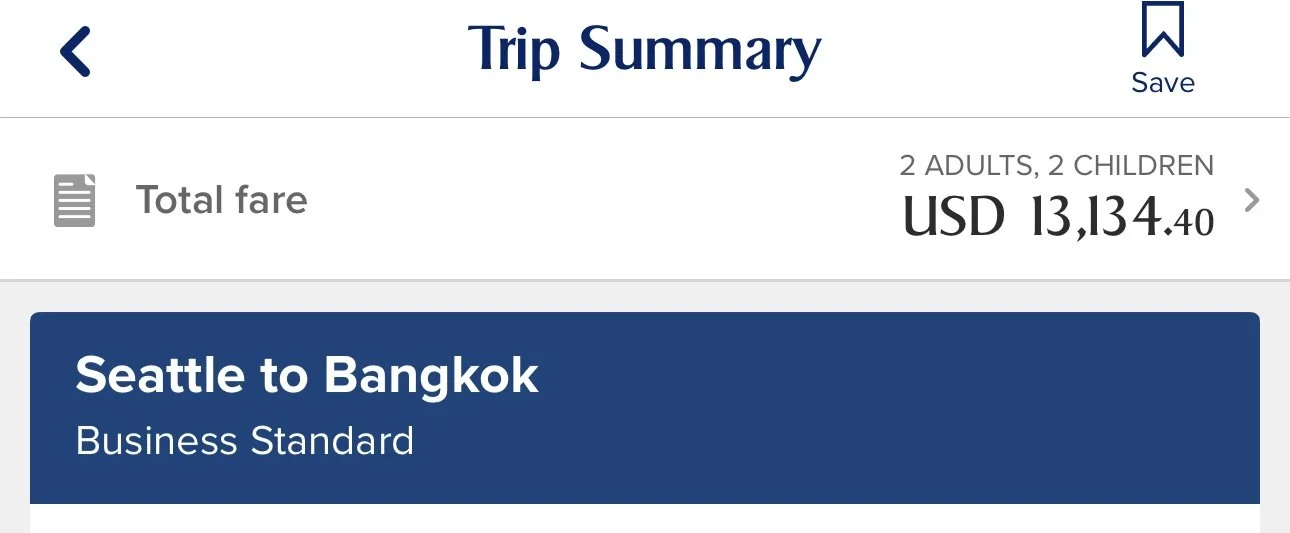
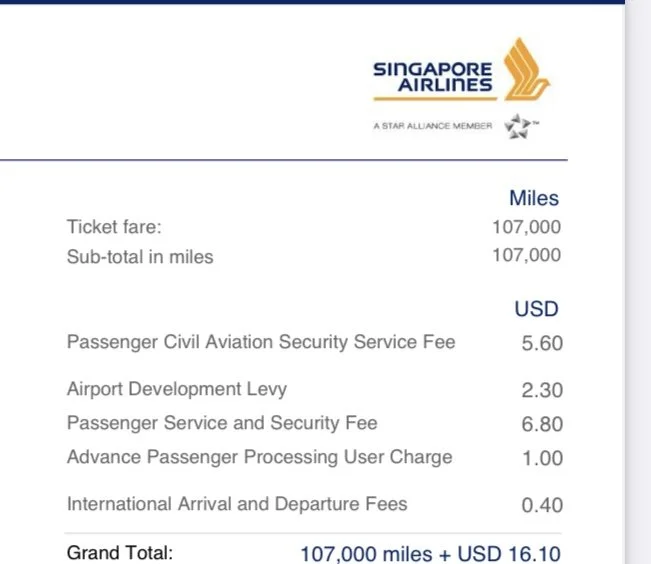
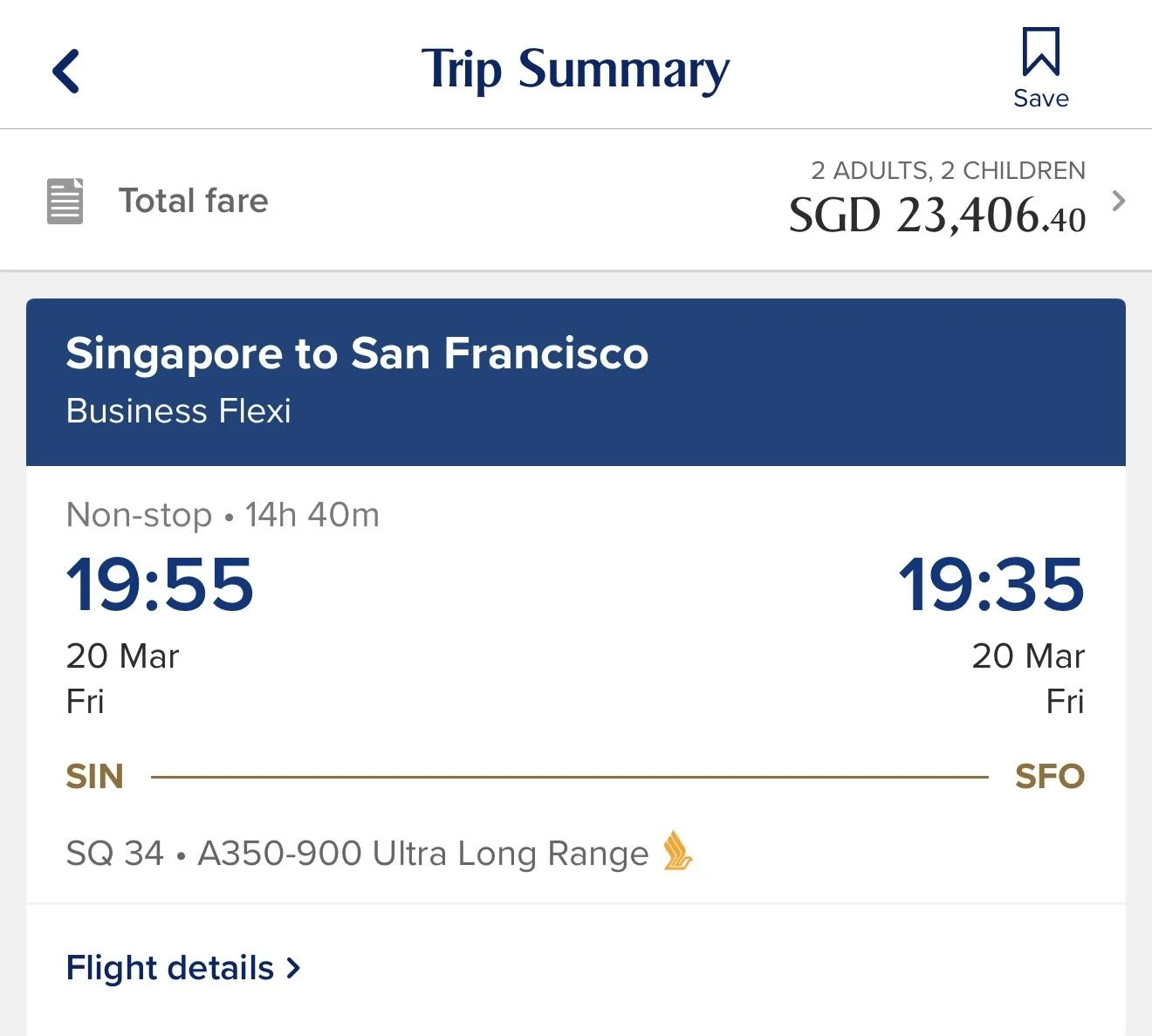
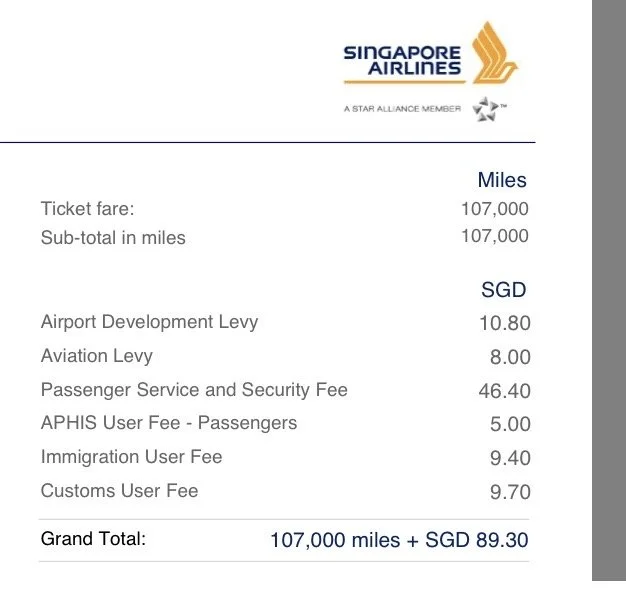
There is no world in which our normal family travel budget would have included approximately $31,000 in business-class flights. The points gave us access to an experience we never would have paid for in cash—and we paid approximately $342 total in taxes and fees for those two award bookings.
Did we still pay annual fees on the premium cards that helped us earn those points?
Absolutely.
But paying those annual fees made much more sense when we compared them with the travel we were actually able to book.
That does not mean every redemption will provide the same value. Cash fares, award pricing and availability can change significantly depending on the travel dates and route. It also does not mean a premium card is automatically right for everyone.
For us, it showed what was possible when a premium card’s welcome offer, transfer partners and a specific travel goal all came together.
It Wasn’t Just About Flying Up Front
Our first premium card also introduced us to airport lounges.
Before that, layovers usually meant finding an empty seat near the gate, buying overpriced airport food, and trying to keep everyone entertained for a few hours.
Now, depending on the airport, we're able to relax somewhere quieter, grab something to eat, recharge our phones, and start the next flight feeling a little less exhausted.
Would we have paid cash for lounge access every trip?
Probably not.
So we don't pretend every lounge visit is worth the retail admission price.
But it absolutely makes travel days easier, especially when we're flying internationally with two kids.
Some Benefits Are Harder to Put a Price On
Another experience we’ll never forget was our family stay at Kimpton Grand Roatán Resort & Spa.
We used points and hotel credits available through one of our favorite premium travel cards to help book the beachfront resort, which would have otherwise cost far more than we would normally spend on a hotel.
Our booking also included daily breakfast, which made our mornings easier and helped reduce what we spent once we arrived. Instead of immediately figuring out where to eat, we could enjoy breakfast together and then head straight to the pool or beach.
Would we have paid cash for the full cost of the resort and every included benefit?
Probably not.
That’s why we’re careful not to assign an inflated value to every credit or perk simply because it is available.
But benefits that lower the cost of a trip, simplify our mornings and allow us to experience a property we may not have booked otherwise still have real value for our family.
Sometimes that value is financial.
Sometimes it’s how much easier—or more memorable—the benefit makes the trip.
How We Decide Whether the Math Works
For us, deciding whether a high annual fee is worth paying comes down to the math.
Suppose a card’s welcome offer could help you book approximately $1,500 in travel after you naturally meet the stated spending requirement within the required time frame.
If the annual fee is substantially lower than that amount, the potential first-year value may outweigh the fee.
Depending on the rewards program and how you redeem the points, the value could be higher or lower. Transferring points to airline or hotel partners, for example, may sometimes provide access to travel that would otherwise cost considerably more.
But that is exactly why we don’t judge a premium card by its annual fee—or someone else’s estimated point value—alone.
We ask:
What will this card realistically help us book?
Not...
What's the highest possible value someone on the internet says these points are worth?
We only count trips we actually expect to take.
If a redemption is theoretically worth $5,000 but we'd never pay $5,000 ourselves, we don't tell ourselves we "saved" $5,000.
We try to stay realistic.
That keeps us from opening cards simply because a welcome offer looks impressive.
Our Rule: We don't chase the biggest welcome offers. We chase the trips we actually want to take.
The Questions We Ask Before Opening Any Premium Card
Before opening a premium travel card, we ask ourselves a few simple questions.
Can we comfortably meet the spending requirement?
We never spend extra money just to earn points.
If the welcome offer doesn't fit naturally into our normal spending, we wait.
Do we already have a trip in mind?
We're much more likely to open a premium card when we already know how we'd like to use the points.
Having a travel goal keeps us from earning points we aren't sure we'll use.
Does the annual fee fit our budget?
Even if a card could provide incredible value, the annual fee is still a real expense.
Travel rewards should never come before paying your bills or building healthy financial habits.
Will we actually use the ongoing benefits?
This is one of the biggest questions people skip.
The welcome offer may contribute to the card’s first-year value, but we also consider the ongoing benefits before deciding whether to open it.
Opening the Card and Keeping the Card Are Two Different Decisions
This is probably one of the biggest lessons we’ve learned.
Before opening a premium card, we look at both the potential first-year value and whether the card could fit our travel plans beyond the welcome offer.
However, travel habits, benefits and annual fees can change over time. That is why we reevaluate the card when the next annual fee posts rather than assuming the decision we made previously will always remain the right one.
We never open a card with the plan to close it immediately after earning the welcome offer.
Instead, when renewal time arrives, we ask:
If we didn’t already have this card, would its current benefits be worth the annual fee to us today?
If the answer is yes, great.
If not, we review the options available for that account.
Every Year We Ask Ourselves Three Questions
1. Would we pay this annual fee again today?
Not last year.
Today.
If the answer is no, that's worth paying attention to.
2. Did we actually use the benefits?
Not the ones we planned to use.
The ones we really used.
There's a big difference.
3. Do the premium benefits still fit our lives?
We look specifically at the benefits connected to the annual fee.
Are we still using them naturally?
Do they support the trips we are currently planning?
Would we pay for those benefits again today?
This annual review helps us decide whether the premium version of the card still makes sense for us.
Keep It, Downgrade It, or Close It?
When an annual fee posts, we generally consider three options.
Keep It
We usually keep a premium card when:
The ongoing benefits still outweigh the annual fee.
We continue using the travel benefits naturally.
The card still fits our travel goals.
We'd happily pay the fee again today.
Downgrade It
Sometimes the welcome offer was fantastic, but the ongoing premium benefits no longer fit our lives.
If there's a lower annual fee option that still serves a purpose, we'll look into downgrading instead of paying for benefits we no longer use.
Before making that decision, we always confirm:
What happens to our points.
Which benefits we'd lose.
Whether downgrading could affect future welcome offer eligibility.
Downgrade options vary by card and issuer, and a lower-fee option may not always be available.
Close It
Sometimes closing the card is simply the right decision.
Maybe we're traveling less.
Maybe another card now does the same job.
Maybe the annual fee just isn't worth it anymore.
That doesn't mean opening the card was a mistake.
It simply means our travel goals have changed.
Before closing any rewards card, we always make sure we understand what will happen to our points and whether any upcoming trips rely on benefits connected to that account.
When a Premium Travel Card May Not Be Worth It
A premium travel card probably isn't the right fit if:
You rarely travel.
You'd struggle to pay the annual fee.
You'd have to spend extra to earn the welcome offer.
You're unlikely to use the ongoing benefits.
You're carrying credit card debt.
There's absolutely nothing wrong with starting with a simpler travel rewards card.
In fact, that's probably the better choice for many beginners.
When It Might Make Sense
A premium travel card may be worth considering if:
You have a specific trip you're working toward.
You can comfortably meet the spending requirement.
You pay your balances in full.
You travel enough to use the ongoing benefits.
The annual fee fits your budget.
The card aligns with your long-term travel goals.
Our Family's Take
Premium travel cards have helped our family visit places we once thought were out of reach.
They've helped us fly farther, stay in incredible hotels, and make long travel days much more enjoyable.
But we don't believe every premium card belongs in your wallet forever.
Each year, we reevaluate whether the benefits of our premium cards continue to justify their annual fees.
If a card continues providing value, we'll happily keep paying for it.
If it doesn't, we'll downgrade it or close it without feeling guilty.
Because our goal has never been to collect premium cards.
Our goal is to create incredible travel experiences for our family while making smart financial decisions along the way.
Ready to Explore Premium Travel Card Options?
If you’re trying to decide whether a premium travel card could fit your travel goals, you can explore available options and compare features that may matter to you.
➡️ Explore Our Favorite Premium Travel Cards
Editorial Disclosure
Opinions expressed here are the authors' alone, not those of any bank, credit card issuer, hotel, airline, or other entity. This content has not been reviewed, approved, or otherwise endorsed by any of the entities included within this post.